How we make award winning wines
Harvest is halfway over at Mas de l'Abundància. Here's how grapes become wine — and why getting it right the first time takes 2–3 years.
It's Labor Day today, so we'll take a break from the usual tech-related content and talk about something more fun!
It's been a busy (and tiring) couple of weeks out here in the beautiful wine region of Priorat. Harvest is about halfway over and things in the winery are looking great. We had an excellent growing season this year, and despite a little hail damage from a summer storm a couple weeks back, it's looking like we're going to have about 30% more grapes than last year.
For those who don't know, 3 years ago my wife and I bought Mas de l'Abundància, a small winery in DO Montsant, in Priorat, about 2 hours south of Barcelona. This year, we are on track to produce about 20,000 bottles.
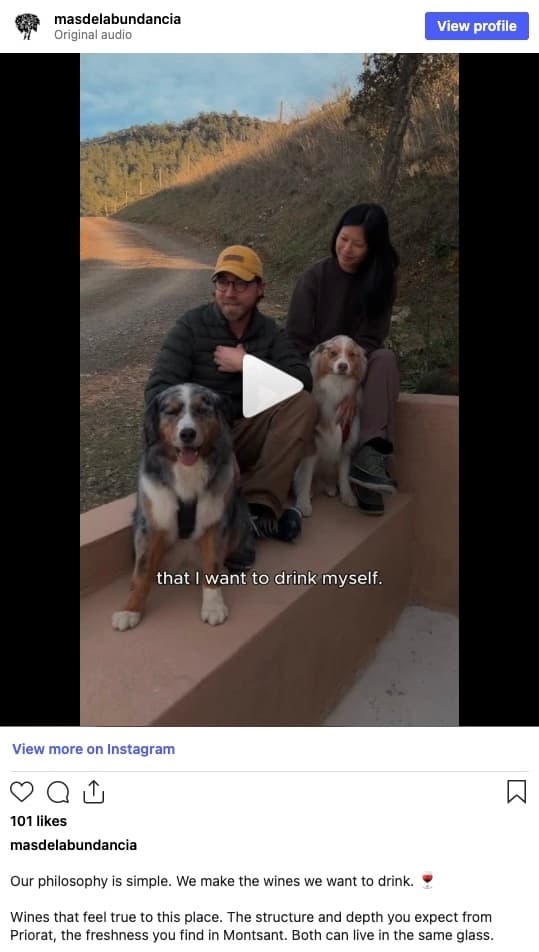
We grow 4 different grape varieties: Grenache, Carignan, White Grenache, and Cabernet Sauvignon.
This year, our grapes were ripe a bit earlier than usual due to the intense summer heat — we started picking about 10 days before we did last year.
We determine when to start our harvest based on lab analyses. For the weeks leading up to harvest we walk through the vineyards every few days and pick a few samples from the vines and test things like pH, acidity, sugar levels, and, of course, taste.
Each vineyard ripens at a slightly different time, but still, once a vineyard is ready to go it becomes a mad rush to get everything picked and processed as quickly as possible.
All of our grapes are hand-picked. Days here start around 6am, because by 2pm it's often over 100 degrees F and being in the vineyards picking grapes at that temperature is dangerous.
Once picked, the grapes are brought to the winery where they are destemmed, crushed, and put into a big stainless steel tank for maceration to extract color and flavor from the grape skins.
The magic of fermentation also starts around this point.
While the must (unfermented grape juice) is resting on the skins, we throw a few liters of yeast into the tank. There are dozens of different natural and commercial yeast strains available and for each wine we choose the strain that creates the flavor profiles we are looking for.
To oversimplify fermentation, it is essentially the process of yeast eating sugars and turning them into carbon dioxide and ethanol. We let the yeast do its job, carefully watching the temperature and other variables as it progresses. This is when the juice transforms from must into wine.
After a week or so of maceration, we pump everything into a big pneumatic press and remove all the juice from the remaining skins and then pump the wine back into another tank.
That is, if everything goes according to plan, which almost never happens!
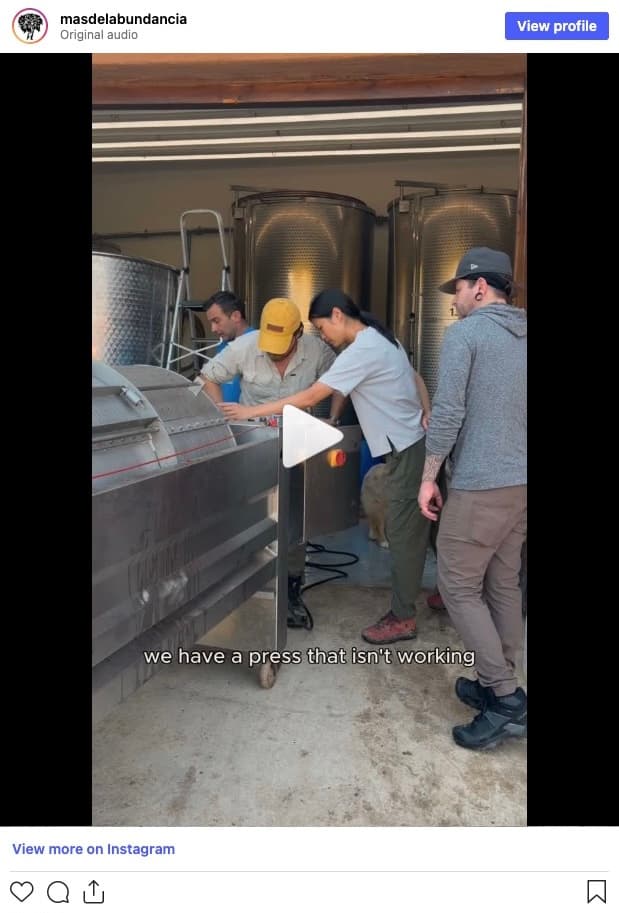
Fermentation takes a few weeks and this is when things around here finally start to slow down again. When a wine is dry (all the sugars have been consumed) we rack it off the lees (all the dead yeast that settles to the bottom of the tank).
Then we start the aging process. Some of our wines are aged in stainless steel tanks and some of them are aged in French oak barrels. Some age for a few months and some age for a couple of years.
We produce two single-varietal White Grenache wines and a single-varietal Cabernet Sauvignon. The rest of our wines are blends, and blending is one of the most fun and challenging parts of wine production.
Making wine is, in some ways, the antithesis of how we build software. By comparison, it takes a very, very long time to create a product. Some of our wines take 2-3 years to go from vine to glass, whereas we can sometimes build software products in a couple of weeks! There's also no undo button and no bug fixes. We have to get it right the first time, which is why taking it slow and being patient is so important in this business.
Luckily for us, our patience is beginning to pay off. We recently had several of our wines receive scores of 92 and 93 points from Decanter and wine critic Tim Atkin.
There's something satisfying about working on a product where you can't rush the process. In most of my professional life, I'm constantly looking for ways to move faster. Wine is a nice reminder that sometimes the best thing you can do is make a good decision, give it time, and wait to see what happens.
If reading this has made you thirsty, we ship to most states in the US and throughout the EU and UK. You can try the wines for yourself at www.masdelabundancia.com/wines.
Enjoy your Labor Day and wish us luck over here!
Cheers,
Ryan
Get the next issue
Subscribe for more on building products, running ventures, and making wine.
Join 3,000+ readers. Unsubscribe anytime.